What makes a fair distractor
The right answer teaches you one thing. The wrong answers, if they are written well, teach you four. Most candidates read the key, nod, and move on. That is a waste. The distractors are where a question does its real work, and whether a bank is worth your time comes down to how much thought went into its wrong answers.
What a fair distractor does
A fair distractor is plausible to someone who half-knows the topic. It should catch the candidate who has read the chapter once but not thought about it, and let through the candidate who actually understands. It is wrong for a specific, teachable reason: a confused mechanism, a step taken out of order, or the right drug given by the wrong route. And it does not depend on a trick. If the only way to fall for it is to misread the stem, the question is testing your English, not your medicine.
Good distractors sit close to right. That is the point. The gap between the key and the best distractor is the exact thing the question is measuring.
Cheap distractors, and how to spot them
The lazy alternatives are easy to list, because you have all seen them:
- Grammatical giveaways. The stem ends in “an” and only one option starts with a vowel. Or the key is the longest, most qualified option, because the writer could not help over-specifying the correct answer. You can pick these without knowing the topic.
- “All of the above” and “none of the above.” Confirm two options are right and the first is forced. These test process of elimination, not knowledge.
- The implausible outlier. One option is so obviously wrong that it never gets chosen. It fills a slot and measures nothing.
- Double negatives and trap wording. “Which is not least likely to…” A candidate who knows the answer still gets it wrong for parsing that under time pressure. It is a reading test wearing a clinical costume.
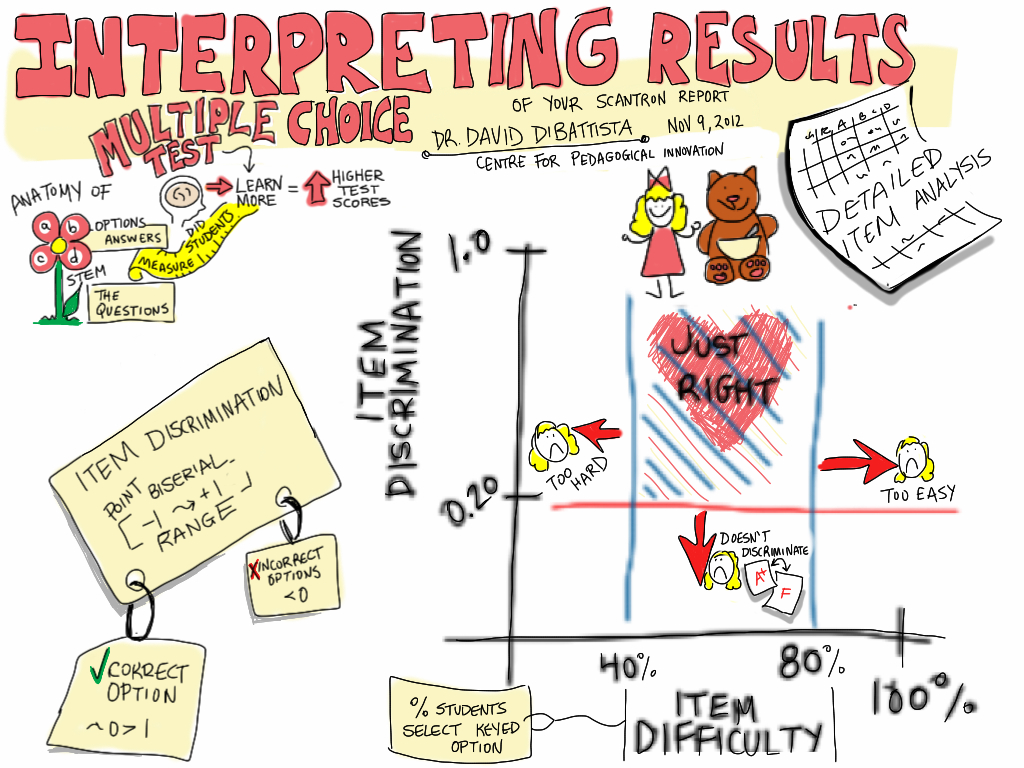
A distractor nobody picks is dead weight. A distractor everyone picks over the key means the question is broken or miskeyed. The useful ones sit in between.
Two worked examples
Anaphylaxis after a bee sting, adult. First-line management.
- Key: intramuscular adrenaline.
- IV antihistamine. Plausible, because antihistamines do settle the urticaria and the itch. Wrong because they do nothing for the airway or the circulation, which are what kill. This catches the candidate who pattern-matches “allergy” to “antihistamine.”
- IV hydrocortisone. A reasonable adjunct, and that is the trap. Slow onset, no first-line role, so reaching for it means you have the timeline wrong.
- IV adrenaline bolus. Right drug, wrong route. It looks expert, which is what makes it fair: it tests whether you know that IM is the default and that an IV bolus courts harm.
Every wrong answer there maps to a real misconception. None of them is a trick.
Paediatric croup, otherwise well child with a barking cough. Best treatment.
- Key: a single dose of oral corticosteroid.
- Nebulised adrenaline. Wrong for this child, right for a sicker one, so it tests whether you can grade severity rather than reach for the strongest tool on the shelf.
- Antibiotics. Croup is viral. Picking this means you have the pathology wrong, which is worth finding out now.
- Salbutamol. This is an upper-airway problem, not bronchospasm, so the drug is aimed at the wrong part of the airway.
How MedQVault writes and reviews distractors
Every distractor in the bank is written to be a specific wrong answer, not filler. When a clinician drafts a question, each option has to name the misconception it catches. A second FACEM then checks that the key is defensible and that no distractor is accidentally correct or unfair on its wording.
That is why every question carries a five-part explanation: why the key is right, why each distractor is wrong (all of them, one at a time), the one-line bottom line, one step further, and the source. The distractor explanations are the part most candidates skim, and the part that moves your score.
The wrong answers also have to keep earning their place. As candidates answer, we watch which distractors get chosen. One that nobody ever picks is not doing its job, so it gets rewritten or retired. The bank gets sharper the more it is used.
Read the wrong answers, not just the key. That is where the exam hides its marks, and it is where a good bank spends its effort.